Shutter-Therapy — Behind Door 269
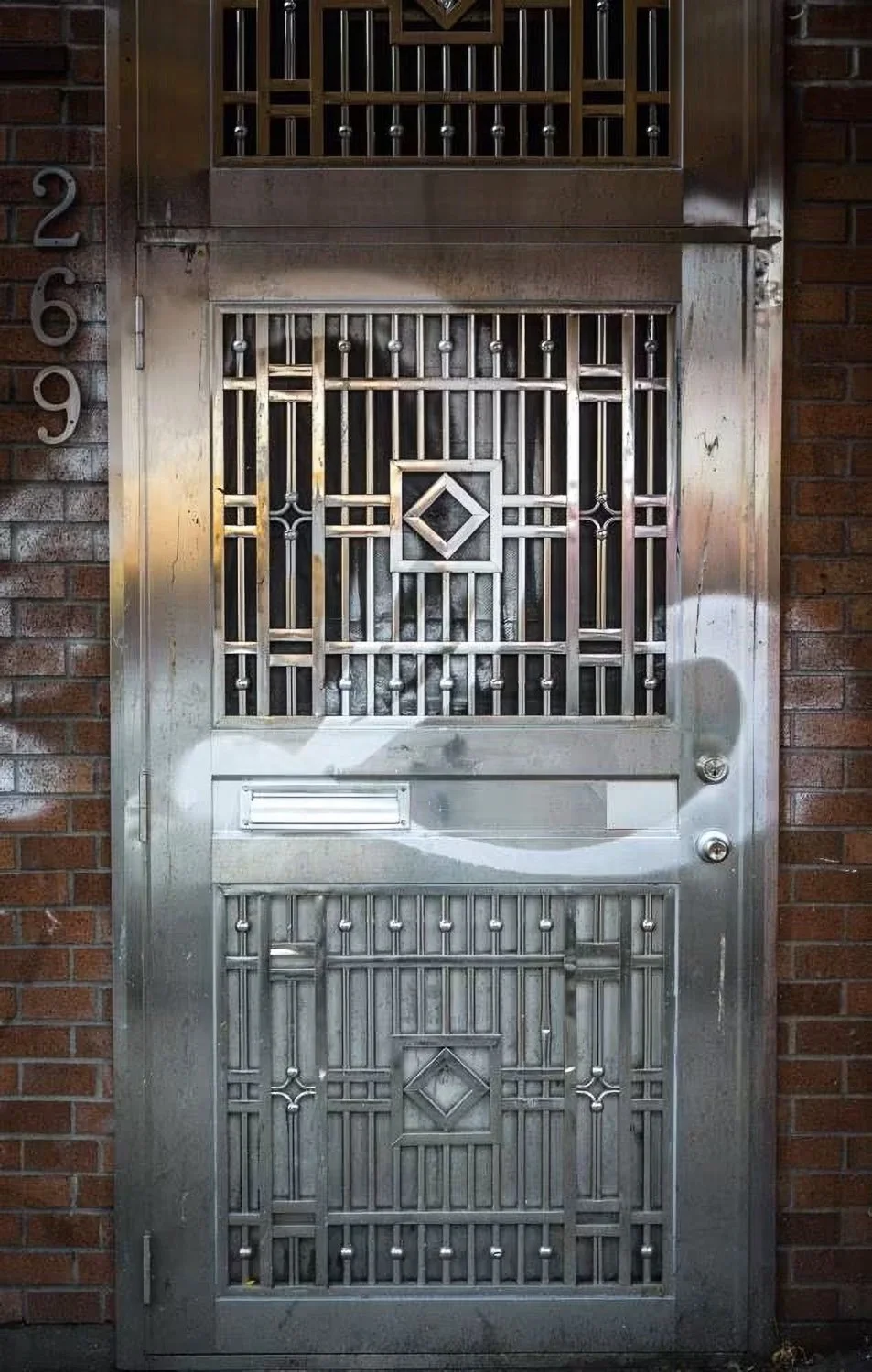
An ornate Art Deco stainless-steel entrance door, No. 269, framed in weathered red brick.
Shutter-Therapy, and the Door on the Corner
When I lived in downtown Vancouver, I had a ritual. I'd clip the leash on Cocoa — my dog at the time — sling my camera over my shoulder, and head out into the city with nowhere in particular to be. I called these walks shutter-therapy.
They weren't about coming home with a great shot. They were about slowing down. A camera in your hand changes the way you move through a place: you stop more, you look up, you catch the things most people stride right past. Shutter-therapy was a standing invitation to be present — to pause, to actually see, and to ask the quiet questions. How did this come to be? What am I really looking at? What story is this image trying to tell me?
This door was one of those pauses. On a walk in July 2016, this ornate steel face stopped me mid-stride — layer on layer of Art Deco geometry worked into polished metal, a bright diamond at its centre, the number 269 climbing the brick beside it, and decades of weather and city grime settled into the surface. I stood on the sidewalk longer than a passerby should, just wondering about it. Who had walked through it. What it was built to guard. How many hands had pushed it open long before mine ever raised a camera to it.
The line that came to me at the time was simple: ever wonder what's behind a particular door?
That question is really what shutter-therapy is about. Every image is telling a story, and the work isn't to invent one — it's to be quiet enough to notice the one already there. In the light. In the wear. In the geometry someone chose to build, a century ago, on an ordinary street corner most of us pass without a second glance.
These days the sidewalks are different — I've traded downtown Vancouver for the slower rhythm of Vancouver Island — but the practice hasn't changed. A camera, a walk, and the willingness to stop and pay attention. To let the ordinary show you what it's been holding all along.
So next time you pass a door you've walked by a hundred times, maybe give it a second look. You never know what it's been waiting to tell you.
— George